Archive for the 'Innovations' Category

Blind Spots

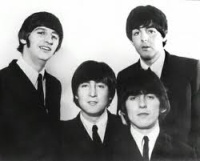
beatlesThe other night at dinner, I was asked whether, when the Beatles came to the US in 1963, I had had any sense that something really big had happened.

Well, I was pretty young in 1963, probably too young to think about such matters. I remember having little interest in the Beatles, but being being very aware that they were something very big. Everyone was aware of that. But unless I am mistaken, pretty much nobody realized that we were witnessing something really big and lasting. More generally, I doubt that anyone at the time had any inkling of the long-term significance of rock ‘n’ roll. We knew it was popular, but we had no idea it would change the world. I’m not sure that in 1963 anyone knew that it was possible for music to change the world.

This led to the more general question: How quickly are great cultural watersheds recognized for what they are? In the few areas I know something about, I think the answer is “usually pretty quickly”. I remember 1910 even less vividly than I remember 1963, but I am pretty sure that it wasn’t long between the appearance of The Love Song of J. Alfred Prufrock and the realization (at least among people who care about this sort of thing) that poetry had changed forever. In mathematics, at least in the past century (and I’m pretty sure for several centuries, or even millenia, before that), major paradigm shifts have generally been recognized very quickly. When a Serre or a Grothendieck upends the mathematical world, the mathematical world quickly knows it’s been upended.

Continue reading ‘Blind Spots’

Make Them Gamble

A Guest Post

by

Jamie Whyte

Last week, Britain had a referendum to decide whether or not to replace its current “first past the post” electoral system with the alternative vote system (AV). During the campaign, the No to AV campaign claimed that changing to AV could cost £250 million, in part because voting machines would be introduced with it. Yes campaigner and member of parliament, Simon Hughes claimed that this was false and that the No campaigners knew it was. He asked the electoral commission to stop the No campaigners from lying.

Similar appeals are often made by other frustrated political disputants. But the idea that electioneering politicians should be allowed to say, and voters to hear, only what the electoral commission deems to be true and honestly believed is outrageous. It would make election outcomes depend on the judgement, not of the voters, but of the electoral commissioners.

The proposal is also unnecessary. As anyone who has argued with blowhards will know, there is an easy way of showing that someone does not really believe what he says. Challenge him to a wager. Demand that he put his money where his mouth is.

If the No campaigners really believe that changing to AV would cost £250 million, they will be willing to bet on it. By offering the wager, and having it declined, Mr Hughes would expose their insincerity. Equally, Mr Hughes’ failure to suggest the wager may tell us something about his own alleged certainty on the matter.

Politicians should generally be obliged to bet on the outcomes their various claims. This would discourage their lying which, incredible as it may sound, is even more widespread than people working with the standard definition of lying realise.

Continue reading ‘Make Them Gamble’

Blogging, Tic Tac Toe and the Future of Math

Blogging, as you might have heard, is changing the face of the media. It may also be changing the face of mathematical research. For the first time ever, a substantial mathematical problem has been solved via an accumulation of blog comments, all building on each other. Could this be the future of mathematical research?

Before I explain the problem, let’s talk a little about tic-tac-toe. As you probably figured out long ago, intelligent players of ordinary tic-tac-toe (on a 3 by 3 board) will invariably battle to a draw. But, as you probably also figured out, not every game ends in a draw, because not every player is intelligent.

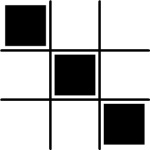
On the other hand, if we blacken out the three squares on the main diagonal and don’t allow anyone to play there (so the game ends when the remaining six squares are filled, then every game is sure to end in a draw. There’s simply no way to get three in a row when you’re not allowed to play on the diagonal:

Continue reading ‘Blogging, Tic Tac Toe and the Future of Math’

Fewer Voters Are Better Voters

A Guest Post

by

Jamie Whyte

Last year, the British government decided to lift the top rate of income tax from 41 to 52 percent. Last month, Lord Myners, the UK Secretary of State for Financial Services, said that the policy would raise not nearly as much revenue as had been expected. People are apparently making efforts to avoid paying it. A host of politicians and commentators responded that it was always a foolish idea, a purely “political” policy.

But how can a bad policy be good politics? What defect in the electoral system can explain this?

Continue reading ‘Fewer Voters Are Better Voters’