I want to really marry the public and the private sector.
| –Hillary Clinton |


I want to really marry the public and the private sector.
| –Hillary Clinton |
 The following analysis assumes (as seems likely) that Trump has won Minnesota, Michigan, Arizona and Alaska, while Clinton has won New Hampshire. This gives Trump a total of 316 electoral votes, or 46 more than he needed.
Gary Johnson’s vote share exceeded the Trump/Clinton margin in 10 states, 6 of which (with a total of 38 electoral votes) were won by Cliniton and 4 of which (with a total of 75 electoral votes) were won by Trump.
Therefore, without Johnson in the race (and assuming that his absence wouldn’t have switched any Clinton voters to Trump voters or vice versa), Trump might have won as few as 316-75=241 electoral votes (making Clinton the president-elect) or as many as 316+38=342.
From there, you can draw your own conclusions.
Hey, stay calm. Germany elected Hitler, and they survived okay.
Less flippantly, there are some silver linings in this very dark cloud:
None of this remotely compensates for the prospect of living in an America where Trumpian stormtroppers go door to door ferretting out people to deport. None of it compensates for the Trump Depression that we’re in for if he’s serious about his trade policies. But it’s something.
Continue reading ‘Late Night Thoughts’
 Throughout this election season, Scott Adams (the Dilbert guy) has been right when I (and a whole lot of others) have been wrong. On his blog, Adams kept patiently explaining why Donald Trump would be a strong contender, while I and a great many others believed (or maybe just hoped and therefore believed we believed?) that Trump was a flash in the pan. Each of the many times that Trump seemed to take himself out of contention, Adams predicted he’d survive and even thrive — and each time, Adams was right.
Now, however, Adams has turned his attention from Trump’s merits as a candidate (where Adams seems to have had a great deal of insight) to Trump’s merits as a potential president. And here, despite all his past successes, I am quite sure that Adams has outrun his expertise. Policy analysis and political analysis are, after all, two very different things.
From Adams’s most recent blog post:
Continue reading ‘The Dilbert View’
 Larry Kotlikoff is probably the smartest, the most honest and the most thoughtful person ever to run for President of the United States. His platform is well worth a read. The latter part is crammed with carefully considered policy proposals. I’d be very happy to see his tax and health care reforms adopted wholesale. I might vote for him.
That said, I’m annoyed by some of the rhetoric in the early part of the platform document, and I’ve attached some of my quibbles below. (These quibbles stop, arbitrarily, at the end of Kotlikoff’s chapter 4, which is not meant to imply that I have no further quibbles.) In a few cases, I’ve expressed these quibbles harshly. Let me, then, make this perfectly clear up front: I am sure that Kotlikoff has thought about some of this stuff harder than I have. Nevertheless, here’s some of what bugs me:
Continue reading ‘Quibbling with Kotlikoff’
There is at least one national candidate for President this year who you can be sure really understands economics. That’s Larry Kotlikoff, a professor of economics at Boston University with a long string of high professional honors and a history of great accomplishment in both academics and public service (more here). His running mate, Ed Leamer, is no slouch either.
Kotlikoff and Leamer are not on the ballot, but they are registered write-in candidates (the result of a long and arduous process) which means that their write-ins will be counted (unlike write-ins for, say, Daffy Duck). This is a great way to send the message that you prefer a president who is in the habit of making sense. Here is Kotlikoff practicing that habit:
 |
 |
Trump did very well, in the sense that if you hadn’t already known it, you might not have guessed he was a madman. But nothing could be more infuriating than to hear him pitch himself as the candidate of change.
For many decades, the federal government has become bigger and more intrusive. Hilary Clinton wants it to be even bigger and even more intrusive. So does Donald Trump. In this they do not differ. She more or less admits it; he flat out lies.
So let’s remind ourselves that Trump wants a government that is more dictatorial regarding who you can trade with, where you can locate your business, the wage contracts you can negotiate, and who you can invite into your living room. He has no problem with entitlement growth, and when asked what he would cut, has consistently answered “waste, fraud and abuse”, suggesting that he has no problem with any of the big ticket items — no problem with a federal government that maintains Departments of Commerce, Labor, Agriculture, Education, Energy, Transporation, and all the rest of it. Given ample opportunities, he’s never even been able to muster a word of opposition to the Corporation for Public Broadcasting or the National Endowment for the Humanities.
Continue reading ‘The Last Debate’
 Is Donald Trump a racist? I am aware of nothing that would make me think so, but I am also aware that I am not the person most likely to be aware of such things. But I’m not sure it much matters anyway. Under our system of government, and in the current century, it would be rather difficult, I think, for even the most racist of presidents to erect signficant barriers to trade between people of different races. As long as the darkness in a man or woman’s heart does no material harm, I think we can live with it.
On the other hand, Donald Trump is certainly a xenophobe, which makes him as unlikable as a racist, and matters a hell of a lot more, given the ease with which our government routinely erects trade barriers between people of different nationalities.
So the answer to “Is Trump a racist?” is: I’d guess not, I don’t really care (except insofar as I wish nobody were a racist), and it’s the wrong question anyway. The right question is: “Is Trump a xenophobe?”, to which the answer is yes — and it matters.
Is Donald Trump a serial groper? The evidence is mixed. On the one hand, he seems to have lived several decades in the public eye without any visible complaints. On the other hand, we have the notorious Carpe Vulva tape, along with the flood of accusations that followed. The fact that those accusations gibe so closely with the words on the tape could be seen as evidence either for or against their veracity.
But again, who cares, really? The extent of Trump’s boorishness, whatever it may be, seems unlikely to be much different in or out of the Oval Office, and is therefore largely irrelevant to whether it would be a good idea to install him in that office.
Continue reading ‘Frequently Asked Questions About Donald Trump’
|
|
They were both so dreadful in so many ways that I don’t have the heart to review it all.
But just because it came near the very end, this is what sticks in my mind.
I am paraphrasing from memory here, but I believe that Mrs. Clinton “accused” Mr. Trump of having said that:
Quite independent of the question of whether Mr. Trump did or did not say these things, in what sense are these accusations? Specifically:
Will no one rid me of this meddlesome priest?
| –Henry II, 1170 |
Nothing you can do, folks. Although the Second Amendment people, maybe there is, I don’t know.
| –Donald Trump, 2016 |
 |
 |
 |
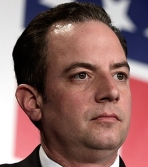
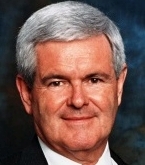
Fox News reports that senior Republicans, including Reince Preibus, Newt Gingrich and Rudy Giuiiani, are planning an “intervention” to try to talk Donald Trump down from putting his psychopathy quite so visibly on display. The psychopathy itself is presumably intervention-proof.
Which raises the question: Why intervene? Presumably the answer is: To get this man elected as President of the United States, from which venue the psychopathy will have free reign. The very necessity of the intervention implies that if the intervention is successful, it must be disastrous. We intervene with drunkards to begin the slow process of returning them to a normal life. We do not intervene with drunkards to get them to hide their drinking so they can be hired as jet pilots in three months’ time.
I realize that there are still a few scattered people who think (or at least hope) that Trump’s whole idiot-manchild schtick is just some kind of an act, and that there is some substance beneath the lunacy. Presumably those who believe that an intervention is necessary are not among those scattered few. This makes it their responsibility, at a minimum, to stop trying to elect him.
This blog does not endorse any candidate for anything, and will never be shy about decrying nonsense, no matter the source. That said, this is an ad worth watching:
President Obama, defending the Trans-Pacific Partnership, just said something very like the following (I heard this on the radio and am quoting from memory):
And another thing: You’ve got to compare this to the realistic alternatives. It’s not fair to compare it to some ideal, unachievable arrangement where we get to sell things all over the world and never buy anything.
Oh. I assume, then, that he’ll be defending his jobs program in terms something like this:
And another thing: You’ve got to compare this to the realistic alternatives. It’s not fair to compare it to some ideal, unachievable arrangement where we get to work all day and never get paid.
For that matter, this also works as a defense of Obamacare:
And another thing: You’ve got to compare this to the realistic alternatives. It’s not fair to compare it to some ideal, unachievable arrangement where get to spend all our time in hospitals and never get well.
Continue reading ‘The All-Purpose Defense’
 In 2016, one of the country’s two major political parties was rocked by an insurgent demagogue who prospered by pandering to ignorance, xenophobia, blind hatred and outright stupidity. So was the other one. One party fought back. The other didn’t.
I am aware that many people, and especially even readers of this blog (including myself at times) believe that the vast majority of polticians prosper by pandering to ignorance, xenophobia, blind hatred and outright stupidity. But the Trump/Sanders phenomenon took this to a whole new level. Never before in my memory have politicians with a real shot at the presidency been so aggressive in their refusals even to try making sense, or in their denials that making sense is a virtue. Never before have they been so forthright in their insistence that as long as we all hate the right people, everything will be alright.
For roughly 40 years now, the Democrats and the Republicans, in their highly imperfect and frequently corrupt ways, have offered competing visions for the country and have, in their highly imperfect and frequently dishonest ways, fostered debate about the merits of those visions. Highly imperfect, frequently corrupt and dishonest — but still with at least some nods toward the value of rational discourse, and, though less often than I’d like, sometimes with considerably more than nods. Politicians in both parties have been known to demonstrate by example that it is possible to be spirited without being mean-spirited, that there is a difference between an argument and an insult, and that your opponents need not be your enemies.
Continue reading ‘In Praise of Debbie Wasserman Schultz’
 |
 |
She hasn’t asked me, but I know who Hilary Clinton should choose as a running mate.
She should choose Jeb Bush. Then she should immediately issue this statement:
Continue reading ‘The Dream Ticket’
Following the latest round of drivel from Donald Trump, this might be a good time to review the standard textbook case for free trade. (You’ll also find this spelled out in The Big Questions .)
Suppose American manufacturers sell 1000 widgets a year to American consumers at a price of $9 each. Now, thanks to a new free trade agreement, foreign manufacturers can sell widgets to American consumers at $6 each. Let’s try to account for all the different ways that Americans are affected.
1. American manufacturers have two choices: They can match the foreign price of $6, or they can go do something else. If they match the foreign price, they lose $3 per widget (compared to what they were making before). If instead they go do something else, they lose at most $3 per widget. We know this, because they always have the option of matching the foreign price and therefore won’t choose any option worse than that. Therefore, the loss to American manufacturers is at most $3000. (In fact, under very mild assumptions, which almost always hold, the loss is surely less than $3000, but we won’t need to know that here.)
2. Existing American consumers — the ones who were going to buy those 1000 widgets anyway — pay $6 per widget instead of $9 per widget, and therefore collectively save $3000.
3. Some Americans who were unwilling to buy widgets at $9 will happily buy them at $6, and will be happy with their purchases. This is an additional gain to Americans.
Bottom line: American producers lose at most $3000. Existing American consumers gain $3000. New American consumers gain something too. Therefore the gains to Americans must exceed the losses to Americans.
Continue reading ‘Trumponomics’
 Are you a corporate employee who wishes that your income were tied more closely to your employer’s profits?
I have good news for you: There’s an easy way to make that happen. Take 10% (or 5% or 20%) of your wages, and use them to buy corporate stock.
Are you a corporate employee who *doesn’t* wish that your income were tied more closely to your employer’s profits?
I have good news for you, too. You don’t have to buy additional stock if you don’t want to.
Hilary Clinton, however, wants to change all that. She wants to force you into a profit sharing arrangement that is, for all practical purposes, equivalent to forcibly converting part of your salary into corporate stock. If you were planning to do that anyway, this will make no difference to you. If you weren’t planning to do it anyway — if, for example, you preferred to diversify your risks by investing your wages in some other industry — then, of course, this will make you worse off.
(I trust that none of my regular readers is silly enough to respond that Clinton’s plan is much better than buying stock, because you get the profit-sharing in addition to your existing salary. But for the benefit of the occasional drive-by reader, this is not possible. Market pressures insure that your total compensation is equal to the value of what you produce for the company, and if one facet of that compensation goes up, then another must go down.)
Continue reading ‘Clintonomics’
So apparently last week, while my attention was directed elsewhere, Donald Trump attempted to attract the support of conservatives by promising to choose all of his Supreme Court appointments from a short list of candidates who he believes conservatives will find appealing.
Regardless of what you think of those individual candidates, there is absolutely no reason this gambit should garner support from conservatives for the simple reasont that the promise is not enforceable. This would be a problem with any politician, but particularly with Trump, who has never felt any qualms (or even, as far as I can see, any embarrassment) about shifting his positions 180 degrees from one day to the next.
But there’s a way to fix that problem, and it’s available not just to Trump but to any politician with credibility issues. Let him issue a list of specific promises (such as “All of my Supreme Court appointments will come from this list”) and then put the bulk of his personal wealth in an escrow account, to be returned to him if he loses the election or if he serves and keeps his promises — and to be paid to someone else if he’s elected and breaks those promises. The named beneficiary could be, for example, the U.S. Treasury, or — if the candidate is particularly concerned about attracting the votes of traditional Republicans — the Republican National Committee.
Continue reading ‘Promise Keeping’
It now seems likely that:
Given that, it seems like one of the following two things should happen at tonight’s debate:
Either:
or
This gives each of them only a 50% chance of survival. But if they’ve already each got only a 50% chance of survival, that’s no loss. And it substantially increases the value of survival, because it gets things over with now instead of a month from now.
If I’m wrong in saying that each currently has a 50% chance — if instead, say, Cruz has a 60% chance and Rubio a 40% chance or vice versa — then they can flip an appropriately weighted coin.
Continue reading ‘Political Strategy’
I’m typing this a few hours before the Iowa Republican Debate. By the time you read it, you might know whether Ted Cruz chose to ignore this advice.
Cruz’s opposition to ethanol subsidies is apparently a problem for him in Iowa. It shouldn’t have to be. The whole point of opposing inefficient subsidies is that if we eliminate enough of them, we can all be better off.
So what Cruz ought to do is introduce a bill eliminating a long list of subsidies, ethanol among them — together with Planned Parenthood, NPR, the National Endowments for the Arts and Humanities and I’m sure it wouldn’t be hard to find another hundred or so — and then emphasize to Iowans that the net effect of the entire package, which takes away their ethanol subidies but also relieves their tax burden, will be to make them richer. A collateral benefit is that he can then argue that the same bill makes New Hampshirites, Nevadans and South Carolinians richer, and if he succeeds in getting the nomination, that it makes Americans generally richer.
As a general rule, I do not understand why politicians take politically risky stands without this kind of bundling. It seems like good politics, and I’m sure it’s good policy.
Ethanol and NPR are of course small potatoes. One could of course do the same sort of bundling with big issues, and politicians of course sometimes do this. But why don’t they do it with both the small stuff and the big stuff?
Scott Adams (the Dilbert guy) offers a Voter’s Guide to Thinking that is so good I am going to reproduce it in its entirety:
Followup to last night’s debate:
Didn’t Rubio essentially disqualify himself when he said he’d prioritize his job as a parent over his job as President of the United States?
Heard only a little of the undercard, but I do have some comments on it. But I’ll add those later.
Re the main debate (I’ll add to this every twenty minutes or so till the debate is over): (Note this is live-blogging, hence not always carefully thought through).
Continue reading ‘Debate Blog’
I did not watch the debate. I chose to go to my aerial silks lesson instead.
When I got home, the debate was half over. I turned it on for about a minute, during which Marco Rubio managed to turn my stomach to the point where I just couldn’t go on.
Apparently he’s all worried about American tech companies “taking advantage” of relaxed immigration laws to hire foreigners who can work more efficiently than Americans. Any firm that does this should be subjected to strict regulations on who they can hire going forward, etc. etc. And there should be a 180 day waiting period before they can hire that foreigner in the first place, etc. etc.
So let’s be clear about this: Rubio cares enormously more about American engineers than about American consumers, American investors, and low-skilled American workers, all of whom benefit from more efficient engineering. Who do you suppose is richer to begin with — the average engineer, or the average consumer/investor/low-skilled worker?
I cannot stand this stuff.
 In a bid for ongoing taxpayer support, Planned Parenthood president Cecile Richards will be appearing before Congress today. It’s reported that as part of her testimony, she will admit that only 1 percent of Planned Parenthood’s affiliates currently harvest fetal tissue, and that even those affiliates charge only modest fees of $60 per tissue specimen.
Which raises the question: Why should we give money to an organization that has access to a valuable resource but can’t be bothered to sell it to the highest bidder?
When your brother-in-law is out of work, you might be inclined to help him out. When your brother-in-law is out of work, deluged with job offers, and refusing even to consider them, you’ll probably be less inclined. Planned Parenthood is that brother-in-law.
Continue reading ‘Bad Planning’
 To me, the biggest disappointment of this camapaign season has been Rand Paul. I’m sure there will be others.
I just saw Senator Paul on Fox News, where he made four substantive statements, one nonsensical, one innumerate, one economically illiterate, and one evasive to the point of dishonesty.
On the subject of collecting cellphone data without warrants, the host posed a hypothetical situation where a foreign terrorist is identified and we want to know which Americans he’s been talking to for the past six months. Paul’s answer: Get a warrant. The problem, of course, is that not even the US government, even newly armed with a warrant, is powerful enough to gather calling data that vanished into the ether six months ago. When the host pointed this out, Senator Paul ignored it.
On the subject of his tax plan, when presented with estimates that he’d be cutting taxes by 3% for the poor and by 13% for the rich, the senator could either have denied those numbers or defended them. Instead, he patiently explained that if you cut everyone’s taxes by 10%, then of course the rich will get bigger cuts (in absolute terms) than the poor. True, but to think that this was in any way relevant to the question requires a complete abandonment of all knowledge of arithmetic.
Continue reading ‘Politics As Usual’
This thread is your opportunity to post comments on the second (9PM eastern time) Repbulican candidates’ debate, in real time as the debate occurs. I might or might not find the stomach to participate.
Keep in mind the guidelines I posted yesterday:
I will have zero tolerance for comments that contribute nothing to the enterprise. In other words, anything of the form “Ha ha! I knew so-and-so was an idiot” will be deleted as soon as they appear. Ideally, all comments will contain food for thought. Bonus points for pointing out subtle self-contradictions. If you insist on posting pure insults, they should at least be hilarious.
Now have at it.
This thread is your opportunity to post comments on the first (5PM) Repbulican candidates’ debate, in real time as the debate occurs. I might or might not find the stomach to participate.
Keep in mind the guidelines I posted yesterday:
I will have zero tolerance for comments that contribute nothing to the enterprise. In other words, anything of the form “Ha ha! I knew so-and-so was an idiot” will be deleted as soon as they appear. Ideally, all comments will contain food for thought. Bonus points for pointing out subtle self-contradictions. If you insist on posting pure insults, they should at least be hilarious.
Now have at it.
I might regret this, but…..
Thursday evening (August 6) there will be two debates among the Republican candidates for president, the first beginning at 5PM eastern time and the second at 9PM eastern time.
Shortly before each debate, I plan to open a thread and invite readers to post comments in real time as the debates progress. Each thread will appear on this site ten minutes before the debate’s starting time.
I will have zero tolerance for comments that contribute nothing to the enterprise. In other words, anything of the form “Ha ha! I knew so-and-so was an idiot” will be deleted as soon as it appears. Ideally, all comments will contain food for thought. Bonus points for pointing out subtle self-contradictions. If you insist on posting pure insults, they should at least be hilarious.
I might or might not join the fray myself.
The first post will appear slightly before 5 and the second shortly before 9. I am heading out now to stock up on junk food.
Today, the Supreme Court ruled that the president of the United States can do any damn thing he wants to, regardless of the law. Where were these guys when Nixon needed them?