In honor of the forthcoming visit of Glen Weyl to the University of Rochester, I thought I’d offer a post explaining the idea behind one of Glen’s signature policy reforms: quadratic voting.
Suppose we’re going to hold a referendum on, say, whether to build a street light in our neighborhood.
The problem with giving everybody one vote is that (on both sides of the issue) some people care a lot more about that street light than others do. We’d like those who care more to get more votes.
In fact, we’d like to allocate votes proportional to each voter’s willingness to pay to influence the outcome. There are excellent reasons to think that willingness-to-pay is the right measure of “caring”. Those reasons will be evident to readers with some knowledge of welfare economics and opaque to others, but it would take us to far afield for me to get into them here. (For the record, if you’re encountering this measure for the first time, you’re almost surely raising “obvious” objections to which there are non-obvious but excellent rejoinders.) For this discussion, I’m going to take it as given that this is the right way to allocate votes.
Here’s the problem: If I allocate votes based on willingness to pay, people will simply lie. If you’re willing to pay up to $1 to prevent the street light, but know that you can get more votes by exaggerating your passion, that’s what you’ll probably do.
Okay, then. If we want to allocate votes based on willingness to pay, then we have to make people actually put some money on the table and buy their votes, thereby proving that they care. We could, for example, sell votes for $1 each. That way, people who care more will buy more votes and have more influence, as they should.
Unfortunately, that’s not good enough. If you care more about the issue than I do, you might buy more votes than I do — but there’s no reason to think you’ll buy more votes in direct proportion to your willingness to pay. Let’s suppose, for example, that the ability to cast a vote is worth $2 to you and $4 to me. Then I should get twice as many votes as you. But if votes sell for $3, I might buy quite a few, whereas you’ll buy none at all. That’s a lot more than twice as many.
So let’s try again: Instead of selling votes for a fixed dollar amount, we sell them on an increasing scale. You can buy one vote for a dollar, or two votes for four dollars, or three votes for nine dollars — and we’ll even let you buy in tiny fractions, like 1/10 of a vote for a penny. The price you pay is the square of the number of votes you buy. That’s the definition of quadratic voting.
Why the square, as opposed to the cube or the square root or the exponential? There really is something special about the square. To appreciate it, try an example: If a vote is worth, say, $8 to you, you’ll keep buying additional votes as long as you can get them for less than $8 each, and then stop. With quadratic voting, one vote costs you a dollar. You’ll take it! A second vote costs you an extra $3 (bringing the total to $4). You’ll take that too! A third vote costs you an extra $5, a fourth costs you an extra $7, and a fifth costs you an extra $9. So you’ll buy 4 votes and then stop. You can similarly check that if a vote is worth $24 to your cousin Jeter, Jeter will buy twelve votes and then stop. Jeter cares three times as much as you do, and he buys three times as many votes. And with a little calculus, you can check that if Aunt Murgatroyd’s vote is worth four or five or nine or twenty times more to her than your vote is to you, she’ll buy exactly four or five or nine or twenty times as many votes as you do. That’s exactly what we wanted. In that sense, this voting scheme works — and, except for minor variations, it’s the only scheme that works.
Continue reading ‘Quadratic Voting: A Pre-Primer’



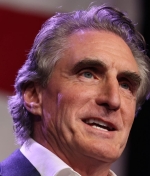 Recognizing that I know no more about politics than most of you, and that I have no notable record as a political prognosticator, here is my prediction, as of about a half hour before the second Republican presidential debate: Doug Burgum breaks out of the pack with strong attacks on Donald Trump.
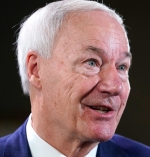 I know very little about Asa Hutchinson (ex-governor or Arkansas, current candidate for president) but I’ve heard him on the radio a few times and he seems worth listening to. I’ve heard him speak sensibly about markets, about Putin, and about Trump.
 Over four years ago, I