I’ve been a little swamped lately and my daily blogging has fallen off. Until things get back to normal, I think I’ll fill the breach by reprinting a few of my old columns from Slate. Today’s entry is on “Why Jews Don’t Farm”.
—————————-
In the 1890s, my Eastern European Jewish ancestors emigrated to an American Jewish farming community in Woodbine, N.J., where the millionaire philanthropist Baron de Hirsch provided land, tools, and training at one of the nation’s first agricultural colleges. But within a generation, the family had settled in Philadelphia where they became accountants, tailors, merchants, and eventually, lawyers and college professors.
De Hirsch had a vision of American Jews achieving economic liberation by working the land. If he’d had a better sense of history, he would have built not an agricultural college but a medical school, because for well over a millennium prior to the settlement of Woodbine, Jews had not been farmers—not in Palestine, not in the Muslim empire, not in Western Europe, not in Eastern Europe, not anywhere in the world.
You have to go back almost 2,000 years to find a time when Jews, like virtually every other identifiable group, were primarily an agricultural people. Around A.D. 200, Jews began to quit the land. By the seventh century, Jews had left their farms in large numbers to become craftsmen, artisans, merchants, and moneylenders—the only group to have given up on agriculture. Jewish participation in farming fell to about 10 percent through most of the world; even in Palestine it was only about 25 percent. Everyone else stayed on the farms.
(Even in the modern state of Israel, where agriculture has been an important component of the economy, it’s been a peculiarly capital-intensive form of agriculture, one that employed well under a quarter of the population at the height of the Kibbutz movement, and less than 3 percent of the population today.)
The obvious question is: Why? Why did Jews and only Jews take up urban occupations, and why did it happen so dramatically throughout the world? Two economic historians—Maristella Botticini (of Boston University and Universitá di Torino) and Zvi Eckstein (of Tel Aviv University and the University of Minnesota)—have recently been giving that question a lot of thought.
Continue reading ‘Why Jews Don’t Farm’
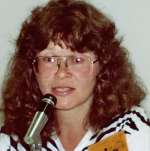 The death last week of the pathbreaking comic book artist Trina Robbins reminded me of an odd bit of history. Before she was a cartoonist, Robbins owned and operated a Lower East Side boutique called Broccoli, where all of the clothes were hand-made, the regular customers included (according to Wikipedia) Mama Cass, Donovan and David Crosby — and all of the merchandise was in Trina’s size, so that the store could double as her personal clothes closet.