Video of my recent talk to the Philadelphia Association for Critical Thinking (topic: Why is There Something Instead of Nothing?”) is now available here.


Because what somebody else jest tells you, you jest half believe, unless it was something you already wanted to hear. And in that case, you dont even listen to it because you had done already agreed, and so all it does is make you think what a sensible feller it was that told you. But something you dont want to hear is something you had done already made up your mind against, whether you knowed—knew it or not; and now you can even insulate against having to believe it by resisting or maybe even getting even with that-ere scoundrel that meddled in and told you.
| —William Faulkner |
| —The Town (Volume 2 of the Snopes Trilogy) |
| —published 1957 |
Scott Adams (the Dilbert guy) offers a Voter’s Guide to Thinking that is so good I am going to reproduce it in its entirety:
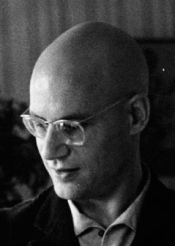 I never met Alexander Grothendieck. I was never in the same room with him. I never even saw him from a distance. But whenever I think about math — which is to say, pretty much every day — I feel him hovering over my shoulder. I’ve strived to read the mind of Grothendieck as others strive to read the mind of God.
Those who did know him tend to describe him as a man of indescribable charisma, with a Christ-like ability to inspire followers. I’ve heard it said that when Grothendieck walked into a room, you might have had no idea who he was or what he did, but you definitely knew you wanted to devote your life to him.
And people did. In 1958, when Grothendieck (aged 30) announced a massive program to rewrite the foundations of geometry, he assembled a coterie of brilliant followers and conducted a seminar that met 10 hours a day, 5 days a week, for over a decade. Grothendieck talked; others took notes, went home, filled in details, expanded on his ideas, wrote final drafts, and returned the next day for more. Jean Dieudonne, a mathematician of quite considerable prominence in his own right, subjugated himself entirely to the project and was at his desk every morning at 5AM so that he could do three hours of editing before Grothendieck arrived and started talking again at 8:00. (Here and elsewhere I am reporting history as I’ve heard it from the participants and others who followed developments closely as they were happening. If I’ve got some details wrong, I’m happy to be corrected.) The resulting volumes filled almost 10,000 pages and rocked the mathematical world. (You can see some of those pages here).
I want to try to give something of the flavor of the revolution that unfolded in that room, and I want to do it for an audience with little mathematical background. This might require stretching some analogies almost to the breaking point. I’ll try to be as honest as I can. In the first part, I’ll talk about Grothendieck’s radical approach to mathematics generally; after that, I’ll talk (in a necessarily vague way) about some of his most radical and important ideas.
Continue reading ‘The Generalist’
Four years ago, roughly two dozen economists and financial theorists signed an open letter to Ben Bernanke urging him to back off the policy of quantitative easing, citing, among other things, the risk of inflation.
Bernanke was apparently unmoved, and quantitative easing went ahead as scheduled. Inflation has not materialized. This raises a number of questions for the signers of the letter. Should they be ashamed? Do they have anything to apologize for? Should they renounce everything they thought they knew about economics and relearn the subject from scratch?
Cliff Asness, one of the signers, responds here. This is a terrific essay, not just on the specific topic of quantitative easing but on the general topic of the lessons we should and should not learn from our mistakes and/or from concerns that don’t materialize.
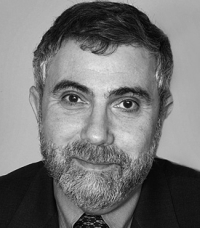
Postscript: True to form, Paul Krugman concludes that Asness, because he disagrees with Krugman, must be entirely ignorant of all the macroeconomic literature on liquidity traps. I wonder if Krugman wants to draw the same conclusion about Asness’s fellow signer John Taylor, whose likely future Nobel prize, unlike Krugman’s (who won for trade theory and economic geography), will recognize Taylor’s widely acknowledged first-rate scholarship and influence in the field of macroeconomics.
When I was a child, my parents took me to Atlantic City every summer. And we would always make a side trip to Longport (three towns away) to collect seashells, because my Dad said that Longport was famous for the quality of its seashells.
Last week, on a whim, my wife and I went down to Atlantic City for a few days, largely because it looked like they were having nice weather down there. In a fit of ambition, we walked the entire 16-or-so-mile roundtrip from the Steel Pier area to the far end of Longport. Along the way, I noticed no difference between the Longport seashells and the Atlantic City (or Ventnor or Margate) seashells. Moreover, we met a lifelong Longport resident (and enthusiastic civic booster) who confirmed that she had never in her life heard that there was supposed to be anything special about Longport’s seashells.
Over my lifetime, I’ve accumulated a lot of advice from my father, some of which seemed to make sense. But in light of my trip to Longport, I’m re-evaluating.
Faithful readers of this blog might remember the despicable antics of Senator Sheldon Whitehouse, who, in a televised hearing last June, spent eight excruciating minutes impugning the honesty of a young economist named Salim Furth — because Furth had presented actual data that contradicted a bunch of numbers Whitehouse had made up out of whole cloth. For those who need a refreseher, the entire sordid story — including Paul Krugman’s reprehensible piling-on to Whitehouse’s McCarthyite smear — is here with a follow-up here.
Well, it turns out that Senator Whitehouse is no more interested in understanding the numbers today than he was last June. Last week, the Heritage Foundation held a symposium on the effects of austerity and what the data actually show — the precise data that Whitehouse disputed. In addition to Furth, who has continued his meticulous research on the subject the speakers included illustrious scholars such as Harvard Professor Alberto Alesina. Heritage sent personal invitations to Senator Whitehouse’s staff and to the various journalists who screwed up this story by reporting Whitehouse’s made-up numbers as accurate and his smears as justified.
The result? None of them showed. Apparently Senator Whitehouse’s passionate interest in the austerity numbers tends to cool off when he can’t hog the spotlight, or might risk learning something.
Meanwhile, if you care more about this subject than Senator Whitehouse does, you might want to look at Furth’s most recent report on the subject, or at the data set he’s posted online, or at his most recent blog post calling Paul Krugman to account for misinterpreting some of these numbers.
 |
 |
It turns out that last week’s tag-team smear of a young Heritage Foundation economist, executed by Senator Sheldon Whitehouse of Rhode Island and his lackey Paul Krugman of the New York Times, was even worse than we knew.
As you’ll recall, Salim Furth of the Heritage Foundation testified before the Senate Budget Committee, accurately presenting data on economic policy changes in various countries for the years 2007-2012. Then Senator Whitehouse, cheered on by Paul Krugman, spent eight minutes excoriating Furth for inventing those numbers — the sort of accusation which, if it were taken seriously, would surely destroy Furth’s career. (As well it ought to, if it had contained a grain of truth.)
And what was Senator Whitehouse’s evidence for Furth’s “meretriciousness”, as he put it? Well, it was the fact that Whitehouse had gone to Furth’s source, looked for the numbers, and found them to be entirely different.
What Senator Whitehouse didn’t tell you was that he was “refuting” Furth’s accurate report of the historical record with projected numbers, which is to say pie-in-the-sky promises by politicians about what they’re going to do in the year 2016. It was, as I said last week, as if I’d announced plans to lose 30 pounds and then promptly gained 10. When Furth accurately reports my recent weight gain, Whitehouse calls him a liar because a 10 pound gain is not a 30 pound loss.
Paul Krugman, who must know better, cheered on this mendacity when he wrote:
a Heritage Foundation economist has been accused of presenting false, deliberately misleading data and analysis to the Senate Budget Committee.
What’s so shocking? Not the false, misleading data and analysis — that’s SOP at Heritage. … What’s shocking is that they got called on it, in real time.
Now it turns out that Senator Whitehouse’s numbers were even farther off base. Not only was were the numbers invented to begin with; he took those numbers for various years and added them up, even though they were already cumulative. It’s as if I’d announced plans to lose 30 pounds in 2013 and another 20 in 2014 — a total of 50 over two years. What Senator Whitehouse did was the equivalent of adding the initial 30 to the total of 50, and then announcing that my projected weight loss is 80 pounds. And then calling Furth a 90-pound liar for accurately reporting my 10 pound weight gain.
Continue reading ‘The Story Darkens’
When a politician misleads the public with distorted or flat-out fictional data, or uses eight minutes of national TV time to smear the character of the careful scholar who dared to report an inconvenient set of facts, you can always count on Paul Krugman of the New York Times to leap to the defense of truth and honesty — or, alternatively, to jump on the bandwagon if the politician happens to be a Democrat.
Here, you see, is what happened this week: Salim Furth, an economist at the Heritage Foundation (and a graduate of the University of Rochester, where I knew him to be a thoughtful and honest researcher) testified before the Senate budget committee, where he presented data from the Organisation for Economic Cooperation and Development (OECD) showing that most European governments have recently increased their spending. (This isn’t surprising for several reasons, one of which is that governments often spend more in recessionary times.)
Enter Senator Sheldon Whitehouse of Rhode Island, who spent eight excruciating televised minutes lambasting Furth and questioning his honesty, by reading out OECD numbers that differed dramatically from what Furth had reported. Some choice comments:
Dr. Furth, I am very concerned about your testimony….
When I look at the graph, for instance, which you source to the OECD — did you actually look at what the OECD says?….
They’ve actually written what the numbers are. And here’s what the numbers actually are, according to the OECD….
I am concerned that your testimony to this committee has been meretricious…I am contesting whether you have given us fair and accurate information.
And then there’s another eight minutes of reading out numbers that are, Senator Whitehouse keeps reminding us actually from the OECD, as opposed to these other numbers reported by Furth, which Furth claims are from the OECD, but obviously can’t be, because Whitehouse has the actual OECD numbers right here, and look how different they are — all of this interspersed with a barrage of attacks on Furth’s character and integrity. (See the video below, if you have the stomach for it.)
Now here’s the thing: There are a couple of legitimate reasons why Furth’s and Whitehouse’s numbers don’t agree. The first is that they’re for different time periods. Furth’s are for the years 2007-2012, while Senator Whitehouse’s are for the years 2009-2016. That’s right, 2016. Which brings us to the other reason these numbers differ: Furth’s come from the historical record, while Senator Whitehouse’s come from somebody’s ass.
Continue reading ‘Lies and Lying Liars’
 |
 |
 |
 |
 |
 |
Last week was not the first time the United States was transfixed by an act of terror. In 1964, three civil rights workers in Philadelphia, Mississippi were (quoting Wikipedia) “threatened, intimidated, beaten, shot, and buried by members of the Mississippi White Knights of the Ku Klux Klan, the Neshoba County Sheriff’s Office and the Philadelphia Police Department.” It took 44 days and an FBI-initiated act of torture to locate their bodies.
The FBI, in a nod to the theory of comparative advantage, subcontracted the torture to the Mafia, more specifically to the Colombo family associate Gregory Scarpa. Here’s the story as relayed by Selwyn Raab, the New York Times investigative reporter who covered the Mafia for 25 years:
[Scarpa] went down to Mississippi for the FBI and kidnapped a KKK guy agents were sure was involved in disposing of the bodies. The guy had an appliance store. Scarpa bought a TV and came back to the store to pick it up just as he was closing. The guy helps him carry the TV to his car parked in the back of the store. Scarpa knocks him out with a bop to the head, takes him off to the woods, beats him up, sticks a gun down his throat and says “I’m going to blow your head off”. The KKK guy realized he was Mafia and wasn’t kidding and told him where to look for the bodies.
(Source: Raab’s book Five Families, which is fascinating throughout. Raab says the story has been verified by “former law enforcement officials who asked for anonymity and lawyers who are aware of the circumstances”.)
The moral of the story is that torture sometimes works. Other times it doesn’t, eliciting either no information, or false information, or whatever “information” the victim believes the inquisitor wants to hear. I am almost 100% ignorant, and hence virtually 100% agnostic, about the relative frequency of these outcomes in those cases where the torturer is both skilled in his art and genuinely interested in eliciting the truth. I will be very glad if any educated reader can shed light on this question. I doubt that we’re likely to learn of any controlled experiments, but I’ll settle for sketchy data or even well-chosen anecdotes. Failing that, I’ll settle for plausibility arguments.
Continue reading ‘Terror, Truth and Torture’
Four terrific posts by David Friedman, partly on psychic harm, partly on talking about psychic harm. I’d recommend these highly even if they hadn’t invoked my name.
Landsburg v Bork: What Counts As Injury?
Response to Bork and Landsburg
Why Landsburg’s Puzzle is Interesting
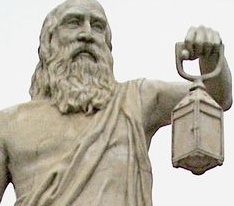 Chapter 8 of The Big Questions is called “Diogenes’s Nightmare” and argues that: 1) In a world of honest truthseekers, there would be no disagreements about matters of fact; 2) In the world we inhabit, disagreements about matters of fact are ubiquitious; therefore 3) in the world we inhabit, there must be precious few honest truthseekers.
If you’re looking to ferret out one of those rare creatures, your best candidate might be a man who argues with eloquence and passion against subsidies for the industry where he makes his living. Meet David Bergeron.
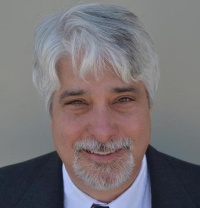 David is the founder and president of Sundanzer, which supplies solar powered refrigerators worldwide, based on technology developed by David under contract to NASA. He also really really really understands why subsidizing solar technology is a terrible idea. And when I met him last week, he impressed me so much that I invited him to make a rare guest post here at The Big Questions. So without further ado:
In a recent Economist on-line debate, the affirmative motion “This house believes that subsidizing renewable energy is a good way to wean the world off fossil fuels” was surprisingly defeated.
In his closing remarks, the moderator softened his strident opposition to the negative case, even admitting that “subsidizing renewable energy, is wasteful and perhaps inadequate to address climate-change concerns.”
The debate, indeed, reopened the question whether anthropogenic greenhouse-gas forcing was a serious planetary environmental concern. But such focus short-changed what I think is the more important question for the Economist. Not only are the renewable-energy subsidies (such as for solar) wasteful and potentially insufficient, they are outright diabolical if indeed there is a looming environmental crisis.
Continue reading ‘Paging Diogenes’
 Often, all economists agree that we all agree. We just can’t agree about what it is that we all agree on. Now comes the remarkable IGM Economic Experts Panel to shed some light.
The experts in question are a small galaxy of economic stars, some plausible candidates for the Nobel Prize, and all highly regarded throughout the profession. Their political affiliations range from left to right to center to “I hate politics”. There are 41 of them altogether. And for several months now, they’ve been polled about important matters of theory and policy.
The very first survey, going back to last September, asked for responses to the following statement:
All else equal, the Fed’s new plan to increase the maturity of its Treasury holdings will boost expected real GDP growth for calendar year 2012 by at least one percentage point.
Exactly 0% of the experts checked “agree” or “strongly agree”. 33% were uncertain and 7% had no opinion. (One refreshing thing about these polls is that the respondent’s have apparently felt free to respond “no opinion” on matters where they are not well informed. Nobody, after all, can be an expert on everything.) When a statement is endorsed by exactly 0% of 41 distinguished experts from across the political spectrum, you can be pretty sure that statement is false.
This first question, though, strikes me relatively uninteresting, since it refers to a specific policy at a specific moment in time. Let’s move on to the next question, which has a bit more staying power:
 |
 |
Viagra analogies have been in the news a lot lately, both in connection with contraceptive coverage and in connection with state laws restricting abortion. I love good analogies and I hate bad ones, so I’d like to take a little time to sort out the bad from the good.
Because there are several scattered points to be made here, I’m putting them in sections and labeling them with Roman numerals, to make it easier for commenters to tell us just which section(s) they’re responding to.
My insurance policy covers Viagra. I would prefer that it didn’t. Given the costs and the probabilities, erectile dysfunction seems to me like a crazy thing to be insured against. There are a whole lot of other things I feel the same way about. I’d prefer not to be insured against losing my eyeglasses. On the other hand, I’m very glad to be insured against needing chemotherapy or kidney dialysis.
Continue reading ‘The Analogists’
Joel Seligman, the president of the University of Rochester, has, in his words, exercised his right to express his views with a dissent from my recent posts about contraceptive subsidies.
Several news organizations have asked me for a statement. Here is what I sent them. (Below the fold is a copy of my email response to President Seligman.)
President Seligman says that the mission of the university is to promote the free exchange of ideas and lively debate, and I agree. That mission is undermined whenever a member of the academic community elevates raw self-interest over the exchange of ideas.
That’s what Sandra Fluke did. She observed that contraceptives are expensive, and therefore demanded that somebody other than herself and her fellow students pick up the tab. She didn’t even pretend to be interested in debating any of the serious issues raised by the question of when some of us should pick up the tab for others’ expenses.
Sometimes we should, sometimes we shouldn’t, and there’s a lot to be said, discussed, and debated about the particulars. An emotional appeal for one’s preferred outcome, ignoring all the substantive issues, is the
exact antithesis of the free exchange of ideas that President Seligman claims to endorse.I’ve had three blog posts on this subject, here, here, and here. The commenters have offered many bright and lively arguments and observations, some of which have led me to modify some of my views.
This is a wonderful thing. It’s also the very opposite of Sandra Fluke’s approach, which amounts to a contemptuous dismissal of the very possibility of engaging these issues through intellectual discourse. I’d have expected a distinguished academic to feel the same way.
And now, my letter to President Seligman:
Last week, the highly distinguished Princeton Professor Ed Nelson announced a proof that the Peano axioms for arithmetic are inconsistent — and hence so is arithmetic itself. If true, this would be much bigger news than faster-than-light neutrinos. It would be bigger news than a discovery that the South had won the American Civil War. It would be far, far bigger news than a discovery that all life on Earth was intelligently designed.
There are, after all, multiple proofs that Peano Arithmetic (that is, the fragment of arithmetic described by the Peano axioms) is consistent. Among those, the simplest and most convincing (to the overwhelming majority of mathematicians) is this: The axioms of Peano Arithmetic, and therefore the theorems of Peano Arithmetic, are all true statements about the natural numbers — and a set of true statements cannot contradict itself.
Ed Nelson rejects that argument because (exempting himself from that overwhelming majority) he doesn’t believe in the set of natural numbers — or perhaps even in individual numbers when those numbers are very large. (How do you know that 810000 exists? Have you ever counted to it?)
 |
 |
 |
Scientists at CERN have found apparent evidence that neutrinos can travel faster than light.
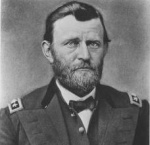
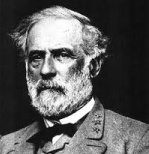
Suppose that tomorrow historians at Harvard find apparent evidence that the South won the American Civil War — not in some metaphorical “they accomplished their goals” sense, but in the literal sense that it was actually Grant who handed his sword to Lee at Appomatox and not the other way around.
Question: Of which conclusion would you be more skeptical?
Of course your answer might depend on exactly what this new “apparent evidence” consists of. So let me reword: As of this moment, which do you think is more likely — that neutrinos can travel faster than light, or that the South won the Civil War?
 Something momentous happened this week. Of this I feel certain.
A little over a week ago, HP Research Scientist Vinay Delalikar claimed he could settle the central problem of theoretical computer science. That’s not the momentous part. The momentous part is what happened next.
Deolalikar claimed to prove that P does not equal NP. This means, very roughly, that in mathematics, easy solutions can be difficult to find. “Difficult to find” means, roughly, that there’s no method substantially faster than brute force trial-and-error.
Plenty of problems — like “What are the factors of 17158904089?” — have easy solutions that seem difficult to find, but maybe that’s an illusion. Maybe there’s are easy solution methods we just haven’t thought of yet. If Deolalikar is right and P does not equal NP, then the illusion is reality: Some of those problems really are difficult. Math is hard, Barbie.
So. Deolalikar presented (where “presented” means “posted on the web and pointed several experts to it via email”) a 102 page paper that purports to solve the central problem of theoretical computer science. Then came the firestorm. It all played out on the blogs.
Dozens of experts leapt into action, checking details, filling in logical gaps, teasing out the deep structure of the argument, devising examples to illuminate the ideas, and identifying fundamental obstructions to the proof strategy. New insights and arguments were absorbed, picked apart, reconstructed and re-absorbed, often within minutes after they first appeared. The great minds at work included some of the giants of complexity theory, but also some semi-outsiders like Terence Tao and Tim Gowers, who are not complexity theorists but who are both wicked smart (with Fields Medals to prove it).
The epicenter of activity was Dick Lipton’s blog where, at last count, there had been been 6 posts with a total of roughly 1000 commments. How to keep track of all the interlocking comment threads? Check the continuously updated wiki, which summarizes all the main ideas and provides dozens of relevant links!
I am not remotely an expert in complexity theory, but for the past week I have been largely glued to my screen reading these comments, understanding some of them, and learning a lot of mathematics as I struggle to understand the others. It’s been exhilarating.
Continue reading ‘O Brave New World!’
My favorite new blogger is the pseudonymous Sub Specie Æternitatis, who I discovered when he left a particularly thoughtful comment on the Fair and Balanced thread here at The Big Questions. A little Google-stalking later, I was immersed in his blog. Before much longer, I was in love with it.
Not only is Æternitatis a great writer; he’s also a gracious colleague who (after I introduced myself by email) agreed to let me reprint one of his incisive commentaries as a guest post here. So without further ado:
 |
|
 |
It is reported that former Vice President Al Gore just purchased a villa in Montecito, California for $8.875 million. The exact address is not revealed, but Montecito is a relatively narrow strip bordering the Pacific Ocean. So its minimum elevation above sea level is 0 feet, while its overall elevation is variously reported at 50ft and 180ft.
At the same time, Mr. Gore prominently sponsors a campaign and award-winning movie that warns that, due to Global Warming, we can expect to see nearby ocean-front locations, such as San Francisco, largely under water. The elevation of San Francisco is variously reported at 52ft up to high of 925ft.
There being very little reason to suppose that the Pacific Ocean would (or could) rise much less in Montecito than in San Francisco, it follows that Mr. Gore just paid nearly $9 million for property, which according to his professed beliefs, will likely soon be literally under water and hence worthless both as a residence and for resale.
Continue reading ‘From an Eternal Perspective’
Blogging, as you might have heard, is changing the face of the media. It may also be changing the face of mathematical research. For the first time ever, a substantial mathematical problem has been solved via an accumulation of blog comments, all building on each other. Could this be the future of mathematical research?
Before I explain the problem, let’s talk a little about tic-tac-toe. As you probably figured out long ago, intelligent players of ordinary tic-tac-toe (on a 3 by 3 board) will invariably battle to a draw. But, as you probably also figured out, not every game ends in a draw, because not every player is intelligent.
On the other hand, if we blacken out the three squares on the main diagonal and don’t allow anyone to play there (so the game ends when the remaining six squares are filled, then every game is sure to end in a draw. There’s simply no way to get three in a row when you’re not allowed to play on the diagonal:

Continue reading ‘Blogging, Tic Tac Toe and the Future of Math’
Here’s a brain teaser I wish I’d invented in time to include it in The Big Questions:
John and Mary live in an isolated village where they have no access to reference materials, no contact with the outside world, and nobody to talk to except each other. One day an anthropologist arrives in this village, sits down for coffee with John and Mary, and quizzes them about their knowledge of the world. John says he’s sure that men have walked on the moon; Mary says she’s sure they haven’t. Never having discussed this issue before, each of them is astonished and flabbergasted by the others’ apparent ignorance. Rather than risk losing all respect for each other, John and Mary agree never to speak of the subject again. But the anthropologist mentions that she’ll be stopping by once a day from now on, and will be glad to know if either of them ever has a change of mind on this topic. If so, the anthropologist will inform the other. Otherwise, the anthropologist will never bring it up either.
The next day (a Monday) nobody’s mind has changed, and therefore the subject is not discussed. The same thing happens on Tuesday, Wednesday and Thursday. Can this go on forever?
Continue reading ‘Brain Teaser’