Congressman Donald Schwerbitz, who represented South Dakota back in the 1960s and 70s, was a visionary environmentalist who sponsored the first legislation designed to reduce our national carbon footprint. It was Congressman Schwerbitz who recognized that carbon emissions are caused primarily by breathing, and he proposed to cut those emissions in half by requiring every American to wear a device that plugs up one nostril.
Author Archive for Steve Landsburg
I once told the late Nobel prize winner George Stigler that I was teaching a course on the relationship between economics and the other social sciences. “Ah”, he nodded. “That would be haughty superciliousness, I suppose”.
I was reminded of this when a comment on a recent blogpost asked for my further thoughts on the economics of superstition. This, after all, might be one area where economics lags behind its sister sciences. And this in turn reminded me of a true social science classic—anthropologist Michael Pacanowsky’s investigation into the origins of the folk belief that the utterance “Please pass the salt” is causally linked to the passage of salt from one end of a table to another.
Back in March, 2001, I wrote a little fable about taxation for the op-ed piece of the Wall Street Journal. Several readers have asked me to post that fable here on the blog. Your wish is my command. At the bottom of this post, I’ll say a few words relating the fable to another recent blog post.
****************
Once upon a time, a man went to work and earned a dollar. He used the dollar to buy a share of stock. The stock paid a dividend of 10 cents a year, 10% being the going rate of return in the land.

When I teach economics, I try to drive home the lesson that words are supposed to mean something coherent. If you want to be rewarded for stringing together a bunch of empty phrases, you should go take an English class.
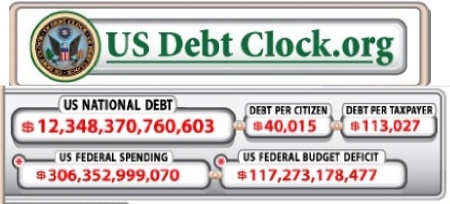
I was therefore maximally sympathetic to the poor XM radio host (I think it was Pete Dominick but I’m not sure) who was stuck interviewing a man named John Sakowicz last Friday. Sakowicz, who hosts his own radio show in northern California, was there to warn about the dangers inherent in our growing national debt. He was very clear about this much: the debt and its associated dangers are massive, explosive, perhaps even apocalyptic. He was entire unclear, however, about exactly what those dangers are.
Last weekend’s roundup triggered some lively back-and-forth regarding the Supreme Court and freedom of speech. Wednesday night’s Obama/Alito showdown was old hat to readers of The Big Questions, who had already been on top of this issue for a full four days.
With the start of the week proper, we had two more lively discussions, over relativity theory and capital taxation; never let it be said that this blog is narrowly focused. We also had a report on my collection of really bad animal books, and we saw pictures of a watermelon car.
Upcoming next week: A recap of the relativity controversy, a few words on how to think (and how not to think) about the national debt, and much more. See you Monday!
Interviews with Democratic Representative Barney Frank and Republican Senator Richard Shelby are the final installments in BigThink’s series of video interviews on “What Went Wrong?” during the financial crisis. (You’ll also find links to all the previous installments.) If you have a taste for politics, you can comment here on what you thought of them.
While everyone else blogs the State of the Union, I prefer to bring you something a little more uplifting—like a watermelon car. I want one.
![]() |
![]() |
![]() |
![]() |
I first discovered this at ReflectionOf.Me, which houses a really quite extraordinary collection of beautiful oddities. You might want to mosey around there and take your mind off politics for a while. You’ll feel better.
I am opposed to all taxes on interest, dividends and other forms of capital income. Supporters of these taxes keep making the same fallacious argument. The purpose of this post is to shame those people out of ever making that argument again. (They are, of course, free to make other arguments.)
The fallacy I have in mind goes like this: First, economics teaches us that everything should be taxed at the same rate to avoid unnecessary distortions. Second, QED.
With appropriate caveats, the first part is true. The problem is with getting from there to the second part.
Let me tell you about my collection of really bad animal question-and-answer books.
This is a genre that thrived back before the Internet (mostly between 1930 and 1960) when connoisseurs of weirdness and misinformation had only bound books to turn to. Its heroes include Osmond P. Breland (author of the classics “Animal Facts and Fallacies”, “Animal Friends and Foes”, and “Animal Life and Lore”) and Alan Devoe (who gave us “Speaking of Animals” and “This Fascinating Animal World”).
Here’s a six-question quiz I compiled from these books.
- Can a toad live for years sealed up in solid rock?
- Can a dog procreate with a skunk?
- Do snakes swallow their young to protect them from danger?
- Can salamanders live in fire?
- Is the rattlesnake a gentleman?
- Can male animals lay eggs?
Last week, I posed some brain teasers and a riddle about special relativity.
The brain teasers were all solved by multiple commenters; I’ll summarize their answers at the end of this post. The special relativity problem proved trickier; here it is again:
A circular train (front of the locomotive attached to the rear of the caboose) sits on a circular track. At some point, the train accelerates and starts traveling around the track. Because the train is moving, I (an observer stationary relative to the track) should see it shrink. But the track doesn’t shrink. So the train can’t stay on the track, and gets pulled inward, ending up inside the track. On the other hand, the passengers say the track has shrunk, so they should expect to get pushed outside the track. How can everyone be right?
Now to the answer.
Still reeling from the revelation that four Supreme Court Justices have withdrawn their support for the First Amendment to the United States Constitution, I am pulling myself together to bring you this week’s blog roundup. Or actually two weeks’ worth of blog roundup, since I skipped last week’s due to travel.
There are a bazillion alleged “paradoxes” in special relativity, all based on exactly the same fallacy, but I might have just invented a brand-new one—-where “invented” is shorthand for “confused the hell out of myself for a while”. When I finally got up and drew a picture (as opposed to lying in bed with my eyes closed doing something that felt like thinking), it became clear that, sure enough, it was the same old fallacy again (how could it not have been?), but in a new enough guise that someone reading this might find it amusing.
While scanning Randy Cohen’s recent Ethicist columns for something to complain about, I found this query about allocating faculty offices:
I am a faculty member at a university undergoing major campus renovations, including new office spaces. Departments were asked to determine their own ways of assigning rooms, but the task is complicated by factors like seniority and rank — does someone with tenure deserve a better room? Some faculty members have greater teaching demands and might need larger rooms to meet with students. What is the most ethical way to allocate offices: seniority? Rank? Lottery?
True to form, Cohen has nothing interesting to say, and offers no rationale for his random suggestions. It never seems to have occurred to him that scarce resources tend to be allocated most efficiently by markets. If he’d done a little research, he might have found this charming account of how the economists at Arizona State solved the office allocation problem.
Whenever I ask about the reasoning underlying some legal principle or another, my friend the law professor is always quick to remind me that “there is no such thing as legal reasoning”. So it is with William Blackstone’s famous doctrine that it’s better for ten guilty men to escape than for one innocent to suffer. Why ten? Because that’s the first number that happened to enter Blackstone’s head; that’s why.
Writing 200 years after Blackstone, Emory Law School professor Alexander Volokh surveyed the history of alternatives to “ten” in a charming essay called n Guilty Men. The bottom line is that a great many alternatives have been offered, almost never with anything approaching a justification.
Peter Leeson of George Mason University (currently visiting the University of Chicago) offers a new take on the medieval practice of “trial by ordeal”:
“For 400 years the most sophisticated persons in Europe decided difficult criminal cases by asking the defendant to thrust his arm into a cauldron of boiling water and fish out a ring. If his arm was unharmed, he was exonerated. If not, he was convicted.”
According to Leeson, this is less crazy than it sounds: As long as defendants believe (superstitiously) that ordeals yield accurate verdicts, guilty defendants always confess to avoid the ordeal. At the same time innocent defendants always opt for the ordeal—and are always acquitted, provided the priests cheat by (for example) substituting tepid for boiling water, or “sprinkling” a few gallons of cold holy water over the cauldron, or liberally redefining what counts as “unharmed”.
My travel schedule for the next several days will probably keep me from posting anything too substantial. So let me leave you with three lovely brain teasers to keep you occupied in the meantime.
1) (Hat tip to Ben Tilly): I have thought of two numbers, which I call A and B. You know nothing about how I came up with these numbers. I plan to flip a fair coin and then tell you the value of A if the coin comes up heads or B if the coin comes up tails. Your job is to guess whether the number I quote is the larger or the smaller of A and B. Devise a strategy that guarantees you a better-than-even chance of winning, no matter what A and B are.
(To make this more precise: Your probability P of winning is a function of A, B and your strategy. Devise a strategy S such that P(A,B,S) is greater than 1/2 for all A and B.)
2) (Hat tip to Stan Wagon): Alice and Bob ran a marathon (assumed to be exactly 26.2 miles long) with Alice running at a perfectly uniform eight-minute-per-mile pace, and Bob running in fits and starts, but taking exactly 8 minutes and 1 second to complete each mile interval (so, for example, it takes him exactly 8 minutes and 1 second to get from the 3.78 mile mark to the 4.78 mile mark, exactly 8 minutes and 1 second to get from the 3.92 mile mark to the 4.92 mile mark, etc.). Is it possible that Bob finished ahead of Alice?
3) (Hat tip to my old friend Steve Maguire): The border between Delaware and its neighbors includes a section with a circular arc: on the circle ten miles from a church in Dover Delaware. Can you name another state border that is partially defined by a circular arc?
I’ll continue to check comments while I’m on the road, but perhaps just a tad less diligently than usual.
I’m sure this won’t be everyone’s cup of tea, but some readers might be interested. I’ve been invited to write the entry on Quantum Game Theory for the Wiley Encyclopedia of Operations Research and Management Sciences, and I thought I’d share the current draft. If this is your cup of tea, your feedback is welcome.
Yesterday we started a conversation about whether mathematics is invented or discovered. Today I’ll give you my three best arguments for “discovered”. And to focus the discussion, I’ll talk not about mathematics generally but about the natural numbers (0,1,2, and so forth) in particular.
I believe the natural numbers exist, quite independently of whether anyone’s around to think of them. Here’s why: First, we perceive them directly. Second, we know non-trivial facts about them. Third, they can explain the Universe. In more detail:

Is mathematics invented or discovered? In my experience, applied scientists often think of mathematics as a human invention, while actual mathematicians (with a few notable exceptions) feel sure that mathematics was always there to be discovered. (Of course, it’s sometimes hard to tell how much of this is genuine disagreement and how much is a language barrier.)
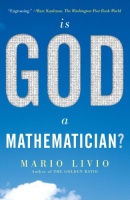
I’ve just finished reading an excellent book by Mario Livio which is entirely about the invention/discovery question, though he’s chosen the (somewhat unfortunate) title Is God a Mathematician? Much of the book is a lively romp through mathematical history, with a well chosen mix of biography and exposition. Although he parts company with them in the last chapter, Livio gives a more than fair hearing to the many great mathematicians who have insisted that they are discoverers, from Pythagoras through Galileo, G.H. Hardy, Kurt Godel, and the contemporary Fields Medalist Alain Connes (among others). Here, for example is Connes:
Once upon a time in America, whenever an administration spokesman spouted economic nonsense, you could rely on Paul Krugman for a sneer, a blast of outrage, and frequently an imputation of the basest motives. That time ended on approximately January 20, 2009. Today Krugman sleeps at the wheel while administration press spokesman Robert Gibbs spews forth the following:
I think it’s safe to say that for quite some time, when it came to building the solar panels and the wind towers and the wind turbines and a lot of the manufactured equipment for clean energy, we had a number of foreign countries that were doing much better in addressing that demand than we were. And as the President has said often, the type of demand for these components in manufacturing is only going to increase as we seek solutions to our energy problems.
And we have to ask ourselves as a country, are we going to create those jobs and create those components, or are we going to import those components from overseas? The President believes that we have an opportunity to lead the world in this type of manufacturing.
Nobody in the Bush administration ever displayed more economic ignorance, but Krugman was all over those guys every time they came close. Now he lets it slide. So let me do his job for him:
When the domestic demand for a product increases, the law of comparative advantage tells you to import more of it, not less. If it is in fact true that “the type of demand for these components is only going to increase” then American manufacturers might want to start producing them, but American consumers will certainly want to import more of them, and any attempt to circumvent that is a good way to make Americans poorer.
(For those following along in their economics textbooks: The world supply and demand for, say, wind turbines, must be more elastic than the domestic supply and demand, so a demand shift has a smaller effect on the world price than the autarkic domestic price and so must increase the foreign comparative advantage—or decrease the domestic comparative advantage, if any.)
For goodness’s sake—if Barack Obama or Robert Gibbs discovers that he really likes bananas on his Cheerios, is his first thought that he’d better start growing bananas, or is his first thought that he’d better figure out where to buy them? That’s the kind of question Paul Krugman used to ask. I miss him.

We led off the week with two posts about unwarranted beliefs—my own unwarranted belief in the power of bathtub hardware and Moody’s economist Mark Zandi’s unwarranted belief in the power of fiscal stimulus.
The rest of the week was devoted to my gallery of heroes, with followup discussions here and here.
Along the way, there were many provocative suggestions for additions to the gallery, of which some struck me as fully worthy, some struck me as implausible, and some I’d never heard of. Below, without commentary, is the full list of suggested additions, with the suggesters names in parentheses; apologies if I overlooked a few. The name most frequently mentioned was Richard Feynman; my mom cast an extra vote for Feynman by email.
I’ll be back, of course, on Monday.
In a triumph of collective action, commenters have now managed to identify all of the personal heroes in my portrait gallery, either in comments to the original post or to the followup. For those who would like to check their answers, here is the gallery again, with full captions. After all the pictures, I’ve attached some brief commentary explaining who’s who and why some of these people are here. I’ll write in more detail about some of them over the coming weeks.
Yesterday I posted a portrait gallery honoring 60 of my personal heroes; readers were quick to identify 47, with remarkably few mistakes, all of which were quickly corrected. As of this writing, thirteen remain. Among these thirteen are the greatest mathematician of the 17th century (assuming we classify Newton as a physicist) and the three greatest mathematicians of the 20th; one of these is quite probably the greatest mathematician of all time. (All in my educated-but-not-fully-educated opinion, of course.) Musical, literary and cinematic greatness are also well represented here.
Over the next couple of weeks, I will try to tell you a little bit more about some of these 60 people. Meanwhile, here are the thirteen mystery men/women. I’ve retained the numbering from yesterday’s post. Who can you identify?
Since childhood, I have dreamed of someday having a house with a portrait gallery, where I would hang portraits of people I greatly admire. Every time I’ve either moved or redecorated, I’ve thought about dedicating a wall to this, but I never really had that much wallspace to spare.
A short time ago, it dawned on me that I actually have an infinite amount of wall space! My wall space is called the World Wide Web. And the World Wide Web is better than a physical wall, because the images are readily available (as opposed to hiding away in antique shops), and it’s easy to put things up and take things down, and you can share it with people you might not want to invite to your house.
So now I am prepared to unveil my World Wide Wall, or at least a first draft. I am well aware that many of these heroes are deeply flawed. I did not disqualify anyone for slaveholding, Louisiana purchases, Nazi sympathies or the imposition of protective tariffs. Not all of them are at the very top of their professions. The only criterion for inclusion was to make my heart go pit-a-pat.
My wall. Let me show you it. How many of these do you recognize? (No fair answering if you’re a personal friend who’s already seen an early draft of this.) And who would be on your wall?
At Big Think, a consortium of bloggers (including me) have been invited to submit questions for use in video interviews with major players in the financial crisis. I posed a question to Mark Zandi, the chief economist at Moody’s, who had recently said this:
“It’s no coincidence that the great recession ended just as the stimulus package began providing its maximum economic benefit.”
My question was:
How do you know?
Here, from the video, is Mr. Zandi’s answer:
You know that metal plate in your bathtub? The one with the little lever on it that opens and closes the drain? What happens when the water level rises above that plate?
When my sister asked me this question over Thanksgiving dinner, I answered, with the utmost confidence, that it causes (quite instantaneously) an enormous flood. (Note the exact wording. This will be important later.) My sister nodded sagely and said “That’s what I thought, too.” My sister and I had the same mother, you see.
And then she asked, quite innocently, “So. How exactly does that work?”. And I was stunned—absolutely stunned—to realize not only that I had no answer to this question, but that there could not plausibly be an answer. Which somehow had never occurred to me in the half century or so that I’d been harboring this ridiculous notion.
It was another abbreviated week due to holidays, but we still had time for our first video post, a celebration of Ronald Coase’s 99th birthday (and a summary of the ideas behind his well-deserved Nobel prize), and a bit of silliness before capping off the week (and the year) with a survey of 2009’s Top Ten posts here at the Big Questions blog.
Today I am off to the annual meeting of the American Economic Association in Atlanta, Georgia. As usual, I’m taking Sunday off, but I’ll be back here Monday, blogging from Atlanta.
Since everyone else is doing end-of-year retrospectives, I thought I’d chime in with a list of the ten most-commented-upon posts here at The Big Questions blog in the year 2009. Now, this blog is only two months old, but we’ve already had roughly 75 posts, so a top 10 list at this point is perhaps not too presumptuous.
Of course, the number of comments may be a poor predictor of post quality. So after I give you the Top Ten, I’ll point you to a few others that I think equally worthy.
That having been said, the Top Ten are:
- In tenth place, Brain Teaser, wherein the puzzle I used as a lead-in got far more attention than the meat of the post itself. That’s okay; it’s a good puzzle.
- In ninth place, What Are You Surest Of?, wherein I asked what you’re surer of than you are of evolution.
- In eighth place, Trading Up was the first of several posts on the case for free trade. Notable followups include Krugman: The Flip Side and The Sierra Club. Or, in a lighter but no less telling vein, The $10,000 Suit.
- In seventh place, Thoughts on Health Care Reform, where I argued that insurance is not part of the solution; it’s part of the problem.
Here the notable followups include Playing Politics, Making Health Care Work and our first video post, Is Health Care a Right?—The Movie. - In sixth and third places, we have the two posts where I presented the questions from the honors exam I administered at Oberlin College: The Honors Class, Part I and The Honors Class, Part II. The notable followups, of course, were the posts that revealed the answers: The Big Answers, Part I and The Big Answers, Part II.
- In fifth place, Krugman to the Rescue, wherein I lament Paul Krugman’s excessive investment in forgetting what he knows about economics.
- In fourth place, There He Goes Again wherein I lament Richard Dawkins’ odd notion that explaining life is the same thing as explaining the Universe.
- In third place—I already told you what’s in third place!
- In second place, Blind Justice, where we tackled the ethics of discrimination. There was notable follow-up discussion over on the Rust Belt Philosophy blog, and more here at The Big Questions in the Analogize This thread.
- Finally, in first place, we have Non-Simple Arithmetic, on the complexity of arithmetic. It’s a bit of a fluke that this landed in first place, since the great flurry of comments consisted almost entirely of a back-and-forth between me and one extremely persistent and extremely dissatisfied poster. Still, I like this post and am glad to see it on the list. If you like this sort of thing, you might also enjoy my posts on Godel in a Nutshell and Principia Mathematica: The Comic Book.
Finally, here are a few of my favorites that didn’t make the Top Ten for comments, though that might just mean they were uncontroversial. Or to put this another way—maybe these posts were so perfect that readers thought they had little to add!
- Policy related: Of Jerks and Bullies (on immigration) and It’s Not Rocket Science, (on cap and trade).
- On the origins of Everything: Life, The Universes and Everything
- Hilarity: On the Amazon reported on one of the funniest things I’ve ever seen. And this followup reported on one of the saddest. If you want a good giggle, you might also check out Postman’s Nightmare
- Math tricks: Here, here, and here.
- Finally, and dearest to my heart, three posts about extraordinary and inspirational people: the great philosopher Daniel Dennett, the great songwriter Johnny Mercer, and the great American Indian leader Red Cloud.
I’m taking New Year’s Day off. I’ll see you Saturday.
If you’re my age, you’ll surely remember the great Pet Rock craze of the 1970’s. (If you’re not my age, maybe you’ve heard about it from your grandparents.) In any event, here’s proof—if it were still needed—that the world just keeps on getting better: While the old Pet Rock just sat there not doing anything, today you can get a pet rock with a USB connection! Here’s the product description:
Simply plug the USB cable into a free port and let the fun begin. The USB Pet Rock will instantly begin to work its magic. People will stop by and ask you what your USB Pet Rock does. Each time, you can make up a new story; for no matter what you say, it will be greater than the truth – because these USB Pet Rocks don’t do a dang thing. Except make you smile. And confuse your friends and coworkers, which will make you smile even more. So, get your USB Pet Rock today, and help make us rich tomorrow.
Now there’s something that could never have been produced under socialism!
(A grateful hat tip to my friend Johanna.)
In other news, the year is winding down, and everyone else is doing end-of-year retrospectives, so I shall do the same. Check this space tomorrow for a review of the Top Ten posts of 2009 here on The Big Questions blog. And Happy New Year.